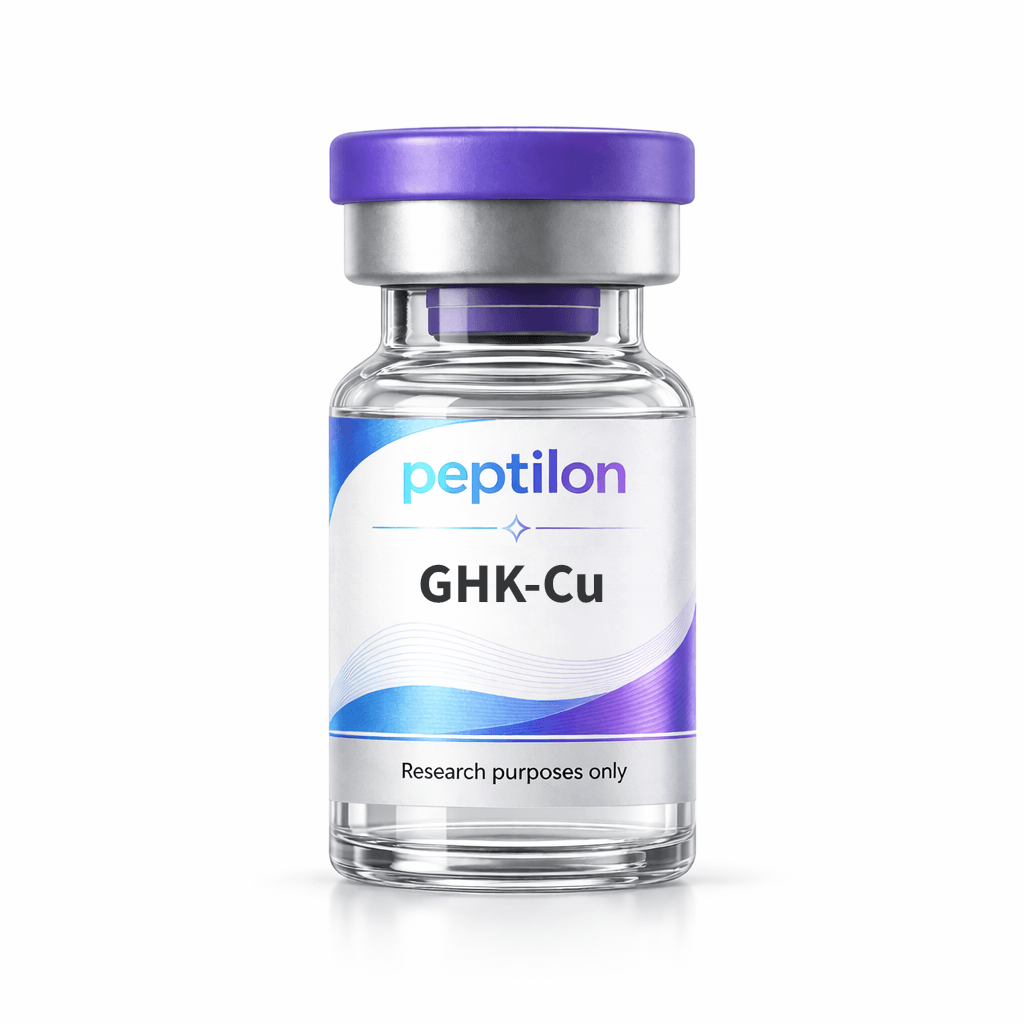
GHK-Cu
GHK-Cu (Glycyl-L-Histidyl-L-Lysine-Copper) is a natural copper-binding tripeptide that is being studied in research for its notable effects on collagen synthesis, skin regeneration, anti-glycation, and wound healing.


- Sent from the Netherlands
- Delivery to pickup point available
- Discreet shipping
Description
Description
GHK-Cu is a copper peptide known within product and research contexts for its relationship to skin-targeted formulation and premium cosmetic positioning. It is precisely this combination of peptide identity and copper binding that gives the product a strong and modern market appeal.
Within research contexts, this molecule is known for its linkage to models regarding skin support, cosmetic care, and regeneration-oriented product concepts. Consequently, GHK-Cu is often associated with serums, premium skincare, and modern skin-targeted blends in market-oriented product copy.
GHK-Cu is discussed in scientific and commercial settings due to potential interactions with skin-related pathways, care contexts, and broader cosmetic positioning. This makes the product particularly attractive for premium catalogs with an elegant, visually strong product line.
Our positioning of GHK-Cu is clear: a premium copper peptide with a distinct product identity, polished specifications, and a modern, luxurious tone of voice. Important: intended exclusively for research use only. Not for human consumption, diagnostic or therapeutic use. GHK-Cu is an investigational molecule and is only legally available within clinical studies.
GHK-Cu lyophilized powder (>99% purity) in a 3 ml bottle. *Requires reconstitution with a solvent such as BAC Water
Additional information
Additional information
| Name | GHK-Cu |
|---|---|
| Type | Koperbindende tripeptide (GHK-Cu) |
| Concentration (mg) | 50 mg, 100 mg |
| Purity | ± 99% (HPLC – COA available) |
| Form | Lyophilized powder |
Usage and disclaimer
- Intended solely for research purposes.
- Not intended for human use, diagnosis, or treatment.
- Only for qualified personnel in a controlled research environment.
- By purchasing this product, you confirm that you have read these Terms of Use and agree to standard research practices.
Related products
Melanotan-II
TB-500
BPC-157